
What every owner, architect and engineer must check before designing a foundation.
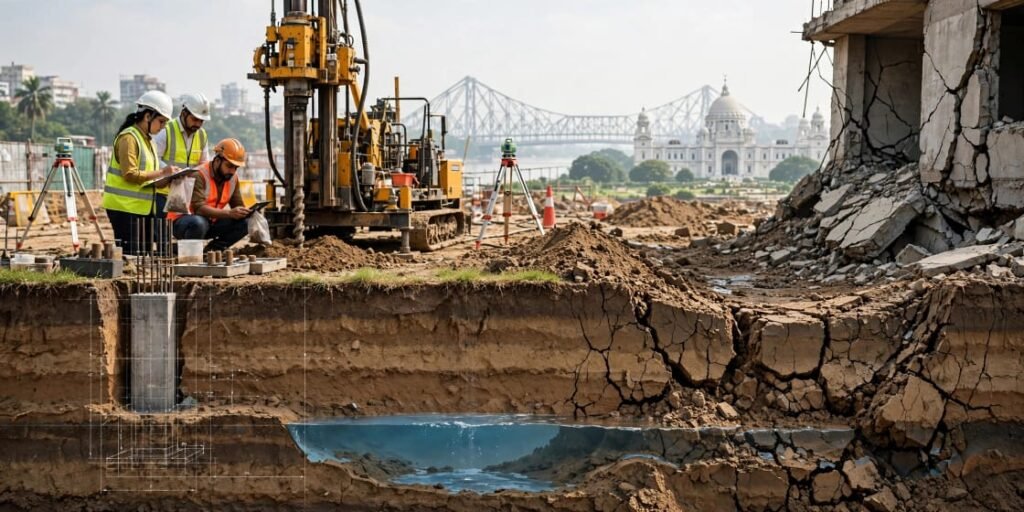
Soil testing for building construction tells engineers what lies below your plot: the soil layers, how much load the ground can safely carry, how much it may settle, and where the groundwater is. Without it, the foundation is designed on assumptions — and if those are wrong, the result can be cracks, redesign and unplanned cost.
Whether you are a developer, architect or building owner in Kolkata or anywhere in West Bengal, this guide explains what a soil test reveals, which tests are needed, how the results shape your foundation, and what can go wrong if you skip it.
Key takeaways
- A soil test shows the soil profile, groundwater level and engineering properties of the ground at your site.
- The results decide the foundation type: footings, raft or piles.
- A single safe bearing capacity (SBC) number does not describe all soil behaviour — settlement matters too.
- Skipping the test raises the risk of differential settlement and costly foundation changes.
- Plan the investigation for the actual building and site, not from a standard package.
Planning a building in Kolkata or West Bengal? Get your soil investigation planned by our engineers.
Why Is Soil Testing Important Before Construction?
Every building passes its full load to the ground through its foundation. The ground must carry that load without shear failure and without settling too much.
Soil is rarely the same across a plot. One layer may be dense sand; another may be soft clay, loose silt or filled ground. Without investigating these layers, the foundation design depends on guesswork rather than site data.
A proper geotechnical investigation tells you:
- the order and thickness of soil layers (strata)
- the engineering properties of each layer
- the groundwater conditions
- the allowable bearing pressure for the proposed foundation
- the likely settlement of the foundation
- whether shallow footings, a raft or piles should be considered
For a developer or owner, this removes a large part of the uncertainty before major construction spending begins.
What Does a Soil Test Before Construction Reveal?
A soil investigation gives information about the ground that no visual inspection can.
1. Soil layers and classification
The investigation identifies each layer below ground level, for example:
- clay and silty clay
- clayey silt and sandy silt
- fine, medium or coarse sand
- gravel deposits
- made-up or filled soil
- weathered rock or rock, where found
The depth, thickness and behaviour of these layers drive foundation design. A thin firm crust over thick soft clay needs a very different foundation from dense sand that continues to depth.
2. Bearing capacity of soil
Bearing capacity is the ground’s ability to carry foundation pressure without shear failure. Engineers work it out from soil strength, footing size and depth, and groundwater level.
Important: safe bearing capacity and allowable bearing pressure are not the same thing unless the design basis and settlement limits are known. A footing can be safe against shear failure and still settle too much.
3. Settlement
Settlement is the downward movement of a foundation as the soil below compresses. It can happen immediately or slowly over months and years.
Differential settlement — when parts of a building settle by different amounts — is what causes most visible damage:
- cracks in walls
- uneven floors
- doors and windows that jam
- distress in beams, columns and finishes
Consolidation tests are especially important where soft, compressible clay or silt is found.
4. Groundwater conditions
Groundwater affects excavation, foundation construction and soil strength. A high water table can affect:
- excavation stability and dewatering
- basement construction
- bearing capacity calculations
- durability of buried concrete
One reading taken during drilling is not necessarily the highest seasonal level — the report should say so.
5. Problem ground
The investigation can flag conditions that need special design, such as uncontrolled filled ground, soft or highly compressible soil, loose sand, organic soil, expansive clay, highly variable layers, or aggressive soil and groundwater.
Which Soil Tests Are Required Before Building Construction?
There is no single test package for every project. The programme depends on the building, its loads, the site and the design questions to be answered.
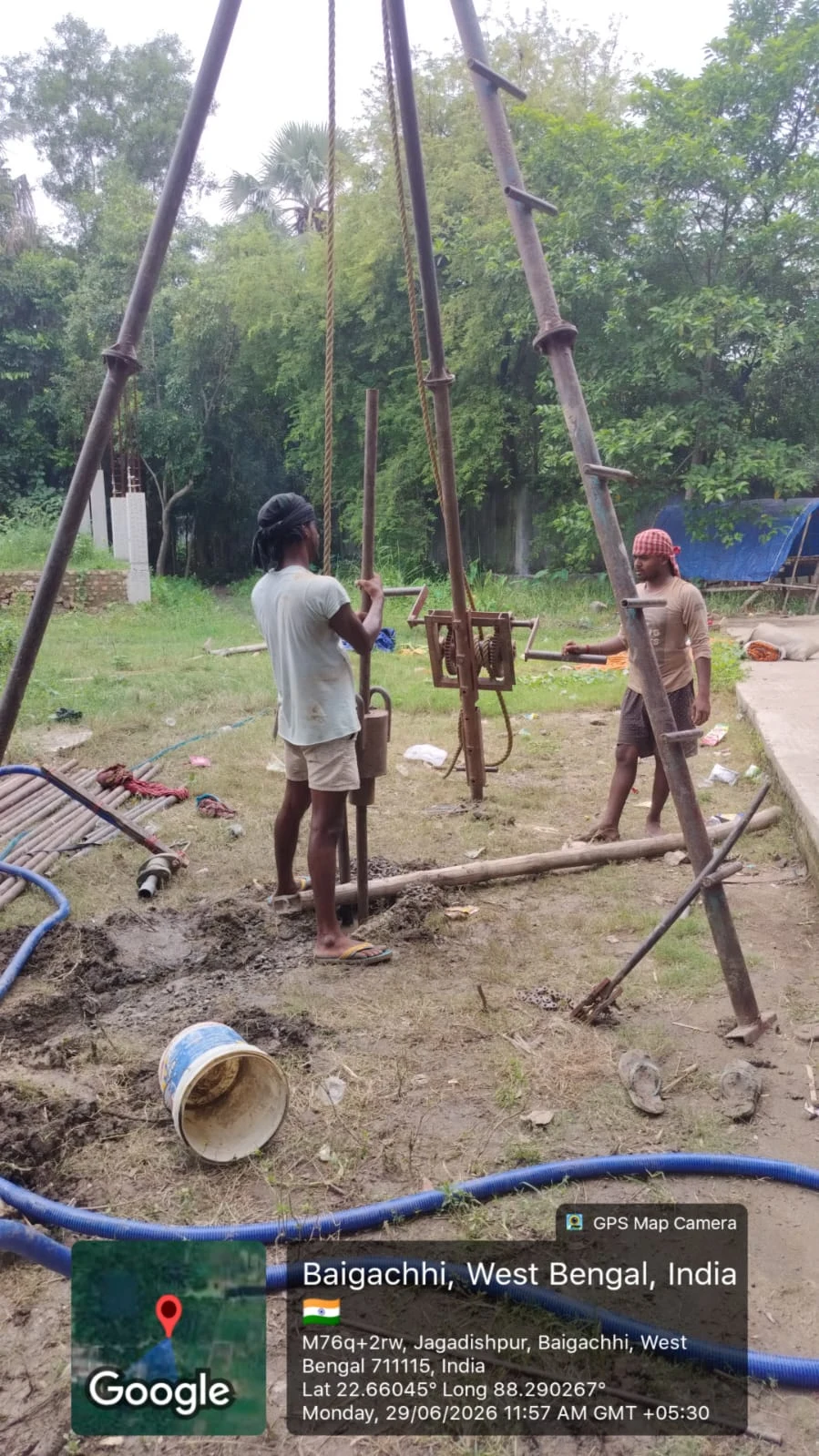
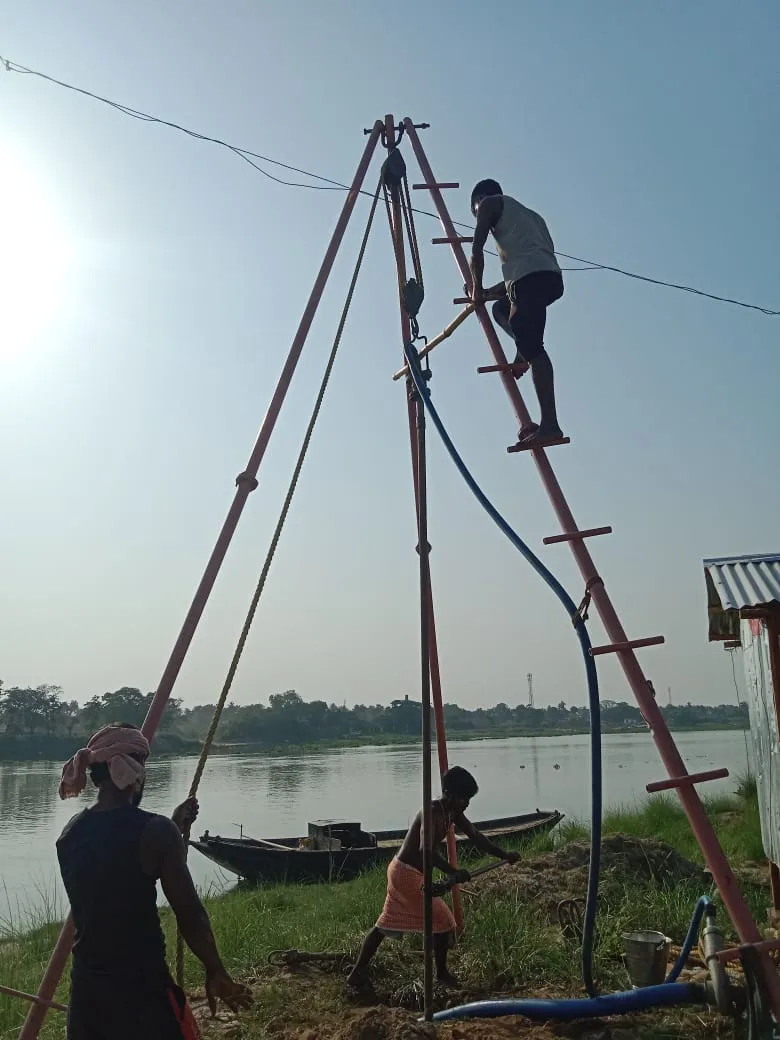
Borehole drilling and soil sampling
Boreholes show the soil profile below the site. Disturbed and undisturbed samples are collected at set depths for laboratory testing, and the borelog records soil descriptions, sample depths, field observations and groundwater.
Standard Penetration Test (SPT)
The SPT is the most widely used field test in boreholes. It measures the soil’s resistance to penetration (the “N-value”). N-values must be corrected and interpreted by an engineer — they are not a direct substitute for every strength or settlement parameter.
Laboratory soil testing
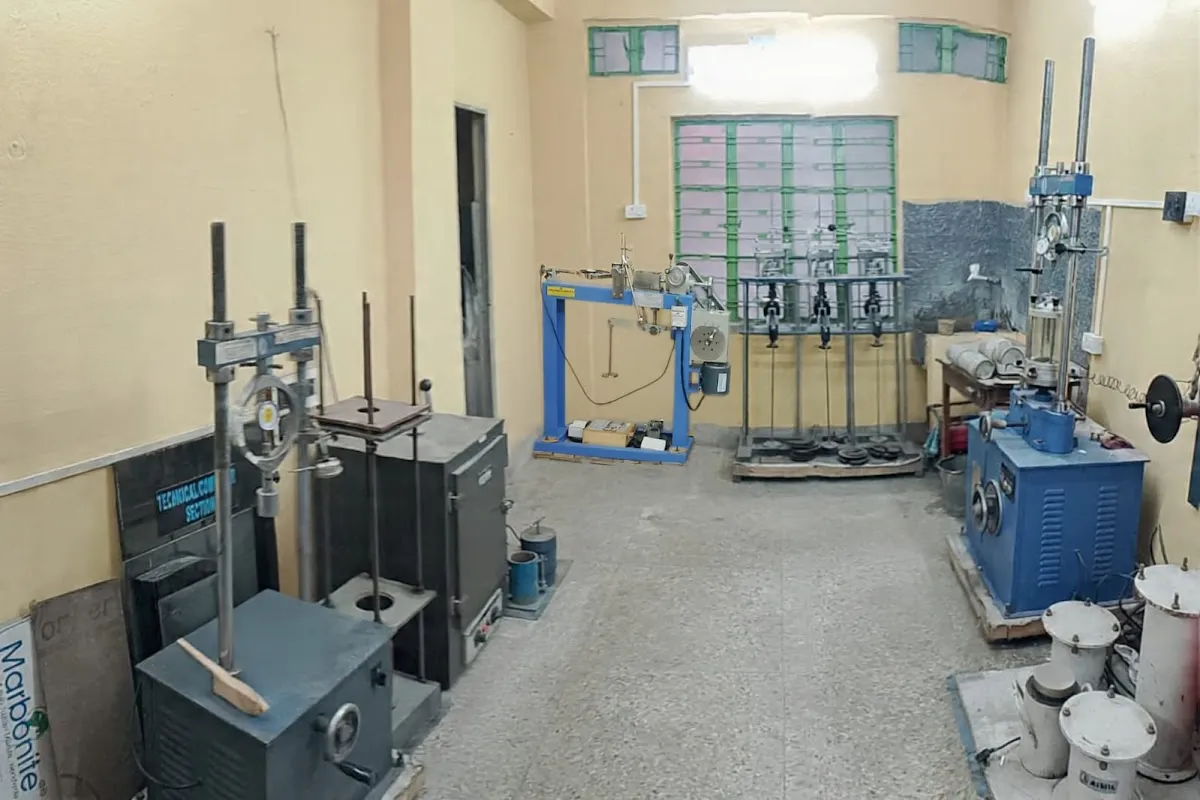
Samples are tested in the laboratory to measure their engineering properties. Common tests include:
| Laboratory test | What it tells the engineer |
|---|---|
| Grain-size analysis | Particle-size distribution of the soil |
| Atterberg limits | Plasticity and consistency of clays and silts |
| Natural moisture content | Present moisture condition |
| Bulk and dry density | Density of the soil |
| Specific gravity | Basic index property of the soil grains |
| Direct shear test | Shear strength parameters |
| Triaxial test | Shear strength under controlled stress conditions |
| Consolidation test | Compressibility and long-term settlement |
| Chemical analysis | Whether soil or groundwater may attack concrete or steel |
Not every project needs every test. The geotechnical engineer selects tests from what is found in the field and what the design needs.
Other field tests
Depending on the project, the investigation may also include:
- plate load test
- cone penetration test
- field permeability test
- rock coring and rock quality assessment
- groundwater monitoring
The aim is enough reliable information for a sound decision — not the largest number of tests.
How Does Soil Investigation Influence Foundation Design?
The structural engineer provides the building loads and layout; the geotechnical engineer evaluates the ground and recommends design parameters. The foundation is designed using both. This is why we keep soil investigation and structural design under one roof.
| Foundation type | When it is usually considered | What the soil test must provide |
|---|---|---|
| Isolated / combined footings | Good ground near the surface, acceptable settlement | Soil strength and settlement at footing level |
| Raft foundation | Heavy or closely spaced loads, variable or moderate soil | Contact pressure, total and differential settlement |
| Pile foundation | Weak or compressible soil near the surface | Soil profile along the pile length, shaft and end resistance, deeper strata |
| Ground improvement | Ground that can be improved more economically than piling | Soil type, depth of weak layers, project requirements |
From our project files: Salt Lake, Kolkata
During soil investigation for a building project in Salt Lake, our boreholes found a very soft soil layer at 2 to 2.5 m depth.
A normal shallow foundation would have rested just above this weak layer. That would have brought a high risk of:
- settlement of the building over time
- tilting of the structure to one side
- serviceability problems, to the point where the building might not remain fit to live in
Our recommendation: a deep foundation, which carries the building’s load past the soft layer, so the structure stays safe, stable and serviceable for the long term.
The lesson: the top few metres of soil can look fine and still hide a weak layer. Only a proper soil investigation reveals it before the foundation is designed.
Ground improvement options include stone columns, dynamic compaction, preloading with vertical drains and soil replacement. The choice depends on the soil, the project and cost — see our ground improvement services. Where piles are used, a pile load test confirms their capacity on site.
What Happens If You Skip Soil Testing Before Construction?
Skipping the test does not mean problems will definitely happen — but it leaves the most important foundation questions unanswered.
- Wrong foundation choice: a shallow footing may look fine on an assumed bearing pressure, while soft clay deeper down controls settlement.
- Differential settlement: uneven soil stiffness causes uneven movement, cracks and damaged finishes.
- Unplanned foundation cost: extra excavation, soil replacement, revised drawings, more concrete and steel, a switch to piles, or extra dewatering.
- Problems after occupation: foundation distress may appear only after the building is in use, when repair is most disruptive and expensive.
If an existing building already shows cracks, tilting or uneven settlement, a structural audit helps assess its present condition and the repairs it needs.
Soil Testing in Kolkata: Why Local Ground Conditions Matter
Kolkata and its surrounding districts have widely varying ground. Alluvial deposits, silt, clayey silt, sand layers and filled ground (including filled ponds and low land) can all be found, depending on the location and history of the site.
Silty soils in particular can change behaviour with moisture, density and composition.
But no two plots are the same. A site in North Kolkata can differ completely from one in New Town, Howrah, Rajarhat, Barasat, Behala or the southern suburbs. Groundwater, earlier land use and filling history all matter. That is why every project in Kolkata, Howrah, North and South 24 Parganas and the rest of West Bengal needs a site-specific investigation — and the same applies to our projects in Bihar, Odisha, Jharkhand and the North-East.
Soil Investigation Report: What Should You Check?
A good report gives much more than one bearing-capacity figure. Before accepting it, check that it includes:
| Section | What it should contain |
|---|---|
| Project and site details | Location, proposed structure and purpose of the investigation |
| Borehole information | Borehole locations, depths and drilling records |
| Soil profile | Description and classification of each layer |
| Field test results | SPT values and other field records |
| Laboratory results | Test methods, sample references and measured properties |
| Groundwater | Water levels recorded and their limitations |
| Recommendations | Bearing pressure, settlement and foundation options |
| Limitations | Assumptions made and any further investigation needed |
Both the structural and geotechnical engineers should review the report before the foundation drawings are finalised. For more on what goes wrong, read 5 common mistakes to avoid in soil investigation.
Is Skipping Soil Testing Really Economical?
Saving on investigation may look like a saving in the budget. In practice, it moves the risk into the foundation — where changes are the most expensive.
| Without soil investigation | With soil investigation |
|---|---|
| Foundation based on assumptions | Foundation based on site data |
| Soil profile unknown | Soil layers investigated |
| Settlement may be overlooked | Settlement evaluated |
| Foundation changes during construction | Foundation options assessed early |
| Uncertain budget | Better-informed cost planning |
The cost of a soil test depends on the location, number and depth of boreholes, field tests, laboratory tests, site access and reporting. There is no single price for every building — the right approach is a programme planned for your structure and a project-specific quotation.
Frequently Asked Questions
Why is soil testing necessary before building a house?
Soil testing shows the ground conditions that will support the house. It helps engineers assess soil strength, groundwater and settlement, so they can choose and design the right foundation and reduce uncertainty during construction.
What happens if you construct a building without soil testing?
The foundation may be designed on wrong assumptions. Depending on the actual ground, the building may face excessive or differential settlement, foundation changes during construction, excavation problems and extra cost.
What does a soil investigation report tell you?
It describes the soil profile, field and laboratory test results, groundwater observations and engineering properties, and recommends bearing pressure, settlement limits and foundation options, with its assumptions and limitations stated.
Which soil tests are required before building construction?
It depends on the project and the ground. Common tests are borehole drilling, the Standard Penetration Test, soil classification, grain-size analysis, Atterberg limits, and shear strength or consolidation tests. The geotechnical engineer sets the programme.
How deep should soil investigation be for a building?
The depth depends on the building loads, foundation type and soil profile. There is no fixed depth for every building; boreholes should go deep enough to cover every layer that affects the foundation.
Can I use my neighbour’s soil test report for my plot?
A neighbour’s report can give a first idea of the area, but it should not replace a test on your own plot. Soil layers can change over short distances, especially where there is filling or different groundwater conditions.
What is the difference between SBC and safe bearing pressure?
The two terms are often used loosely, but their meaning depends on the design basis. Bearing pressure must satisfy both shear failure and settlement limits, together with footing size, depth and groundwater level.
How much does soil testing cost in Kolkata?
It depends on the number and depth of boreholes, SPT, laboratory tests, site access and reporting scope. A project-specific quotation is more meaningful than a general rate — share your plot size, number of floors and location to get one.
Conclusion: Test the Soil Before You Design the Foundation
A foundation should never be designed on assumptions about the ground. A properly planned soil test gives you the soil layers, bearing capacity, settlement and groundwater information needed to choose a foundation that is safe and economical.
Whether you are building a home, a commercial complex, an industrial plant or an institution, understand the ground before foundation work begins.
Planning a project? Talk to our geotechnical engineer.
WhatsApp / Call: 98304 83074 | 98307 37826 · Email: hello@bspepl.com
Learn more about our soil testing and geotechnical investigation services in Kolkata.