
Services
Non-Destructive Testing (NDT)
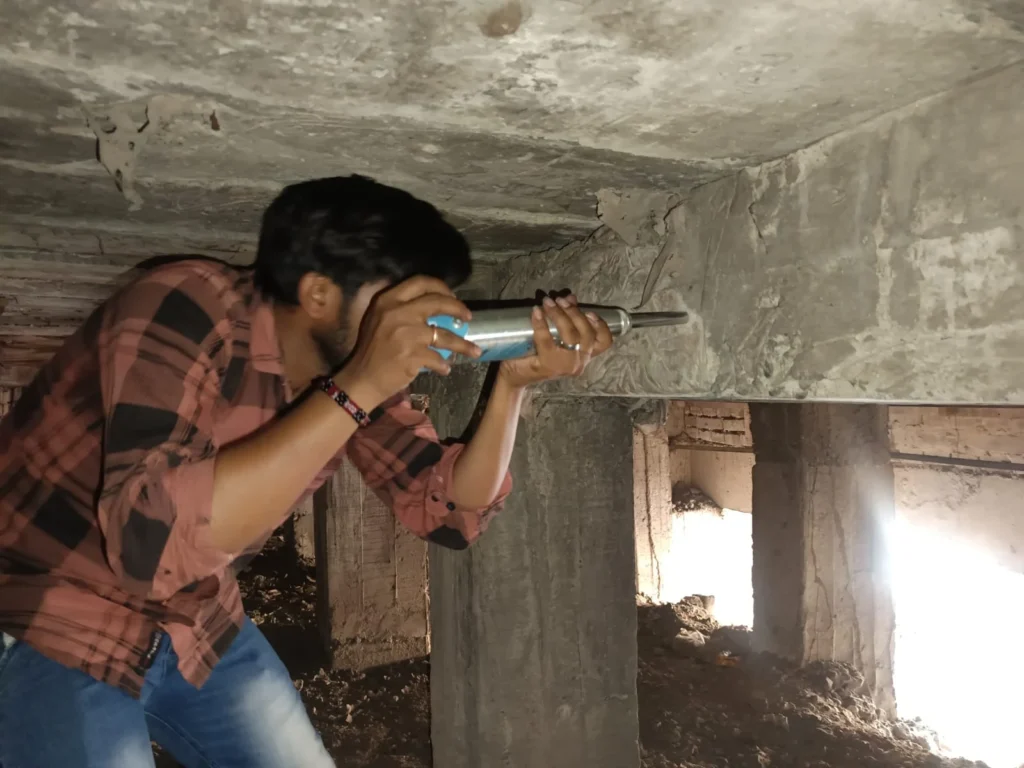
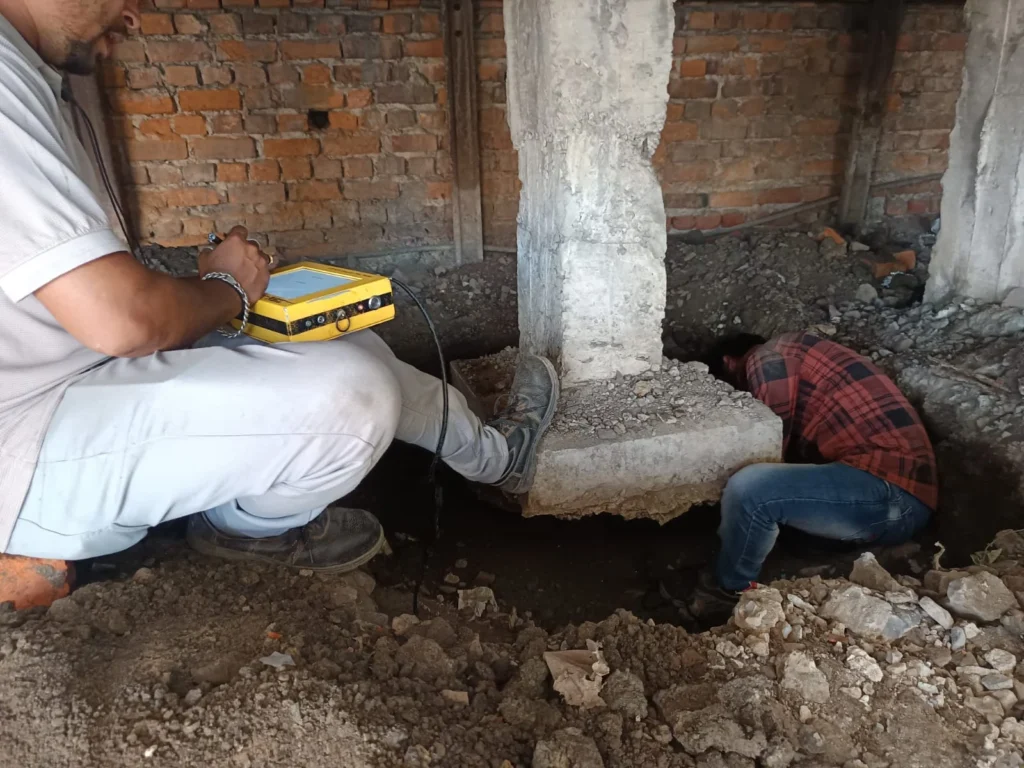
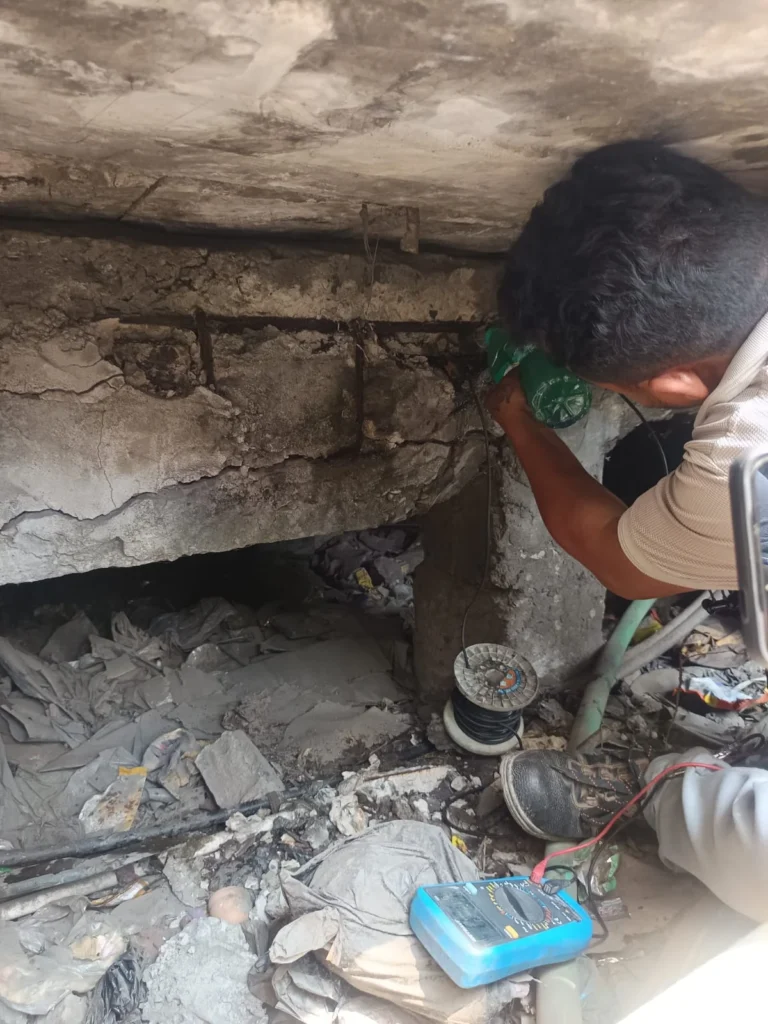
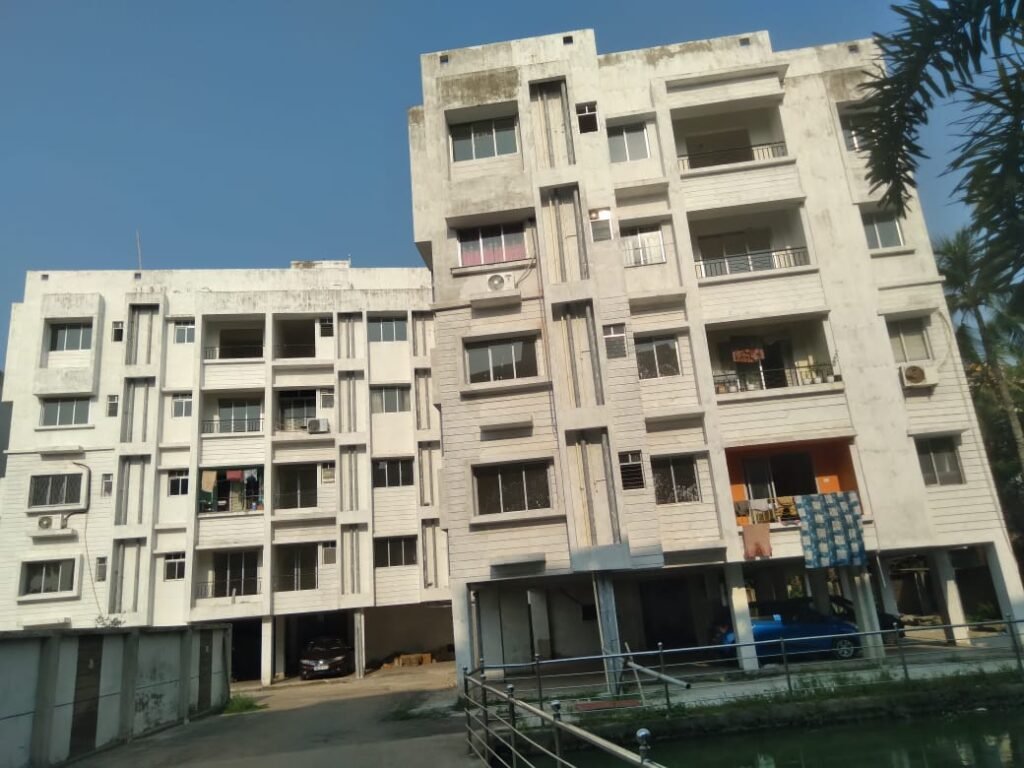
NDT Test Services in Kolkata: Rebound Hammer, UPV and Core Tests
Non-destructive testing (NDT) tells you the real strength and condition of concrete and steel without breaking the structure. It gives engineers measured evidence, instead of assumptions, before any decision on safety, repair or additional load.
BS Projects & Engineers Pvt. Ltd. carries out NDT on concrete and steel structures across West Bengal. Because our engineers also do structural analysis and retrofitting design, we interpret the results for you, not just hand over readings.
Building owners, architects, developers and industries in Kolkata, Howrah and North and South 24 Parganas call us for NDT tests such as the rebound hammer test, the ultrasonic pulse velocity (UPV) test and the concrete core cutting test. We explain what the results mean for your structure, its strength, its condition and what to do next, not just the instrument readings.
WhatsApp us | Call +91 98304 83074 | Request NDT
Our process: 1. Assess the structure → 2. Test with NDT → 3. Retrofit and rehabilitate
When NDT Is Needed
- Checking the quality and strength of newly cast concrete
- Assessing an old or distressed building, bridge, tank or industrial structure
- Before adding floors, machinery, water tanks or rooftop towers
- Checking steel members for corrosion loss and welds for cracks
- Before designing retrofitting or rehabilitation
- Independent third-party verification for owners, architects and contractors
NDT for Concrete Structures
- Rebound hammer test (IS 13311 Part 2) – surface hardness, used to estimate concrete strength and uniformity.
- Ultrasonic pulse velocity test (IS 13311 Part 1) – concrete quality, homogeneity, and internal cracks or voids.
- Core cutting and compressive strength testing – direct strength of concrete from extracted cores, used to calibrate NDT results.
- Carbonation depth test – how far carbonation has reached towards the reinforcement.
- Half-cell potential test – probability of active corrosion in reinforcement.
- Cover meter and rebar scanning – concrete cover, bar location and spacing.
- Crack width measurement and monitoring – size of cracks and whether they are still moving.
- Chemical tests for chloride and sulphate – aggressive salts that attack concrete and steel.
NDT for Steel Structures
- Ultrasonic thickness measurement – remaining thickness of steel members, plates and sections, to find section loss due to corrosion.
- Visual weld inspection – profile, size and visible defects of welded connections.
- Dye penetrant testing – fine surface cracks in welds and members.
- Magnetic particle testing – surface and near-surface cracks in welds of ferromagnetic steel.
- Ultrasonic flaw detection – internal defects and cracks in welds and structural elements.
- Crack mapping – cracks in beams, columns, bracings and connections, with bolt and connection condition checks.
What Your NDT Report Includes
- Test locations marked on drawings or sketches
- Test results with photographs
- Interpretation by our structural engineers
- Recommendations: no action, further investigation, or repair and retrofitting
Structures We Test
High-rise and residential buildings, factory sheds and steel structures, rooftop and ground-based towers, water tanks and reservoirs, sewage and effluent treatment plants, and bridges.
From Testing to a Solution
NDT is one part of a complete structural audit and health assessment. When the results show a deficiency in strength, our engineers analyse the structure and design the retrofitting and rehabilitation needed to restore or improve its capacity.
Frequently Asked Questions
Does NDT damage the structure?
No. Non-destructive tests leave the structure intact. Only core cutting removes small samples, and those holes are repaired immediately.
Can rebound hammer results alone confirm concrete strength?
No. Rebound hammer gives an estimate. It is best combined with ultrasonic pulse velocity and calibrated with core test results.
Can you test steel sheds and welded connections?
Yes. We measure the remaining thickness of steel members and inspect welds for cracks and defects.
What is the rebound hammer test?
The rebound hammer test measures the surface hardness of concrete, which gives an estimate of its compressive strength. Because it reads only the surface, we combine it with UPV and core tests where a reliable strength value is needed.
What does a UPV test show?
The ultrasonic pulse velocity (UPV) test sends a sound pulse through the concrete. The speed of the pulse indicates the quality and uniformity of the concrete and helps locate cracks, voids and honeycombing inside the member.
Which areas do you cover for NDT testing?
We are based in Kolkata and carry out NDT testing in Kolkata, Howrah, North and South 24 Parganas and across West Bengal.
Related Guides
Useful reading before you plan non-destructive testing.
Request Non-Destructive Testing
Call or WhatsApp +91 98304 83074, email hello@bspepl.com, or fill in our enquiry form.